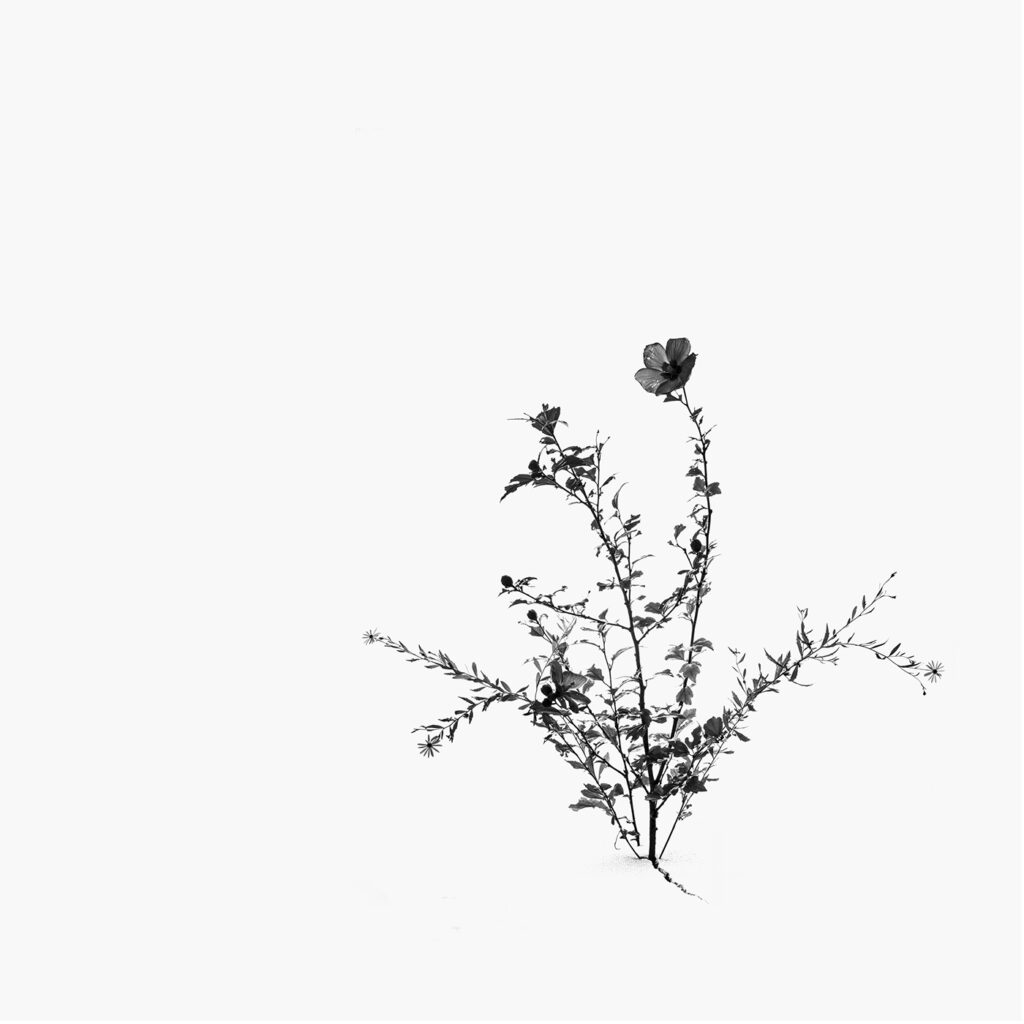
17 Syllables – Echoes of Stillness (2025-)
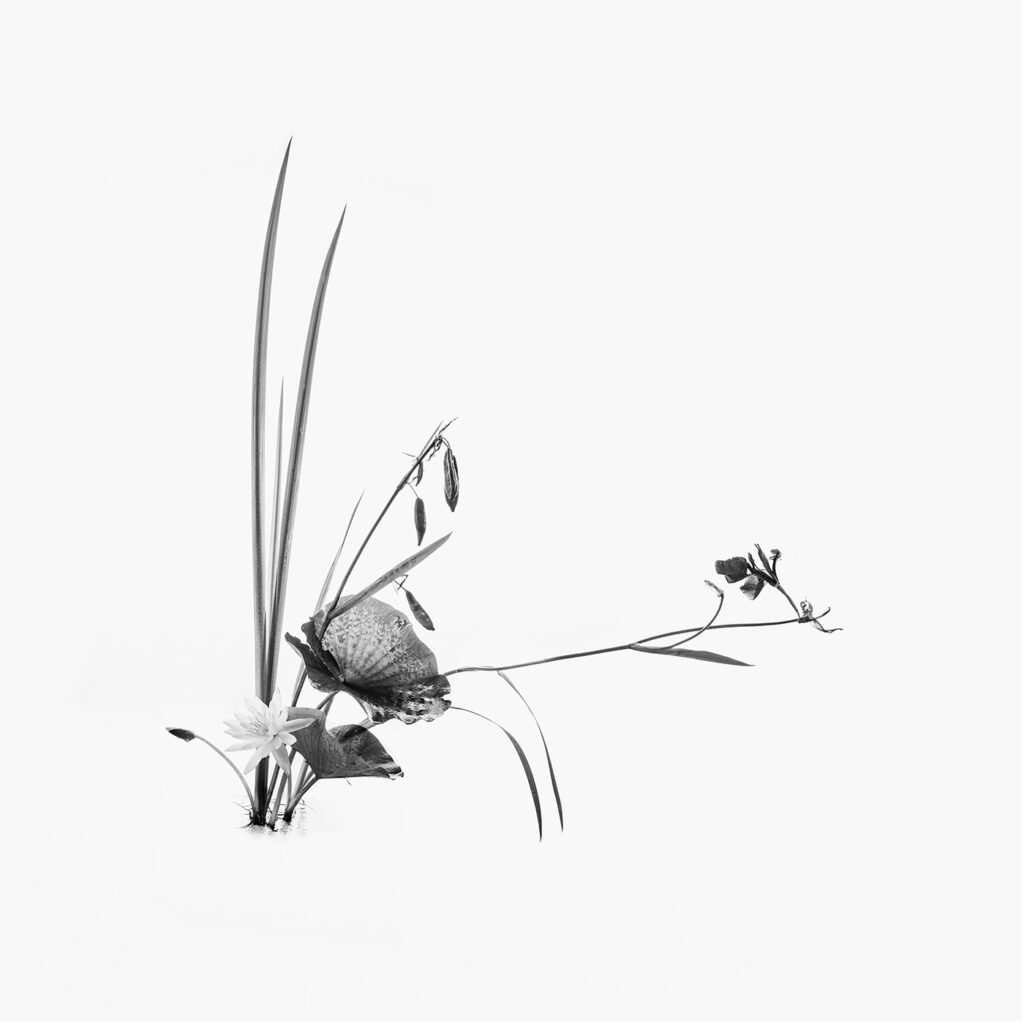
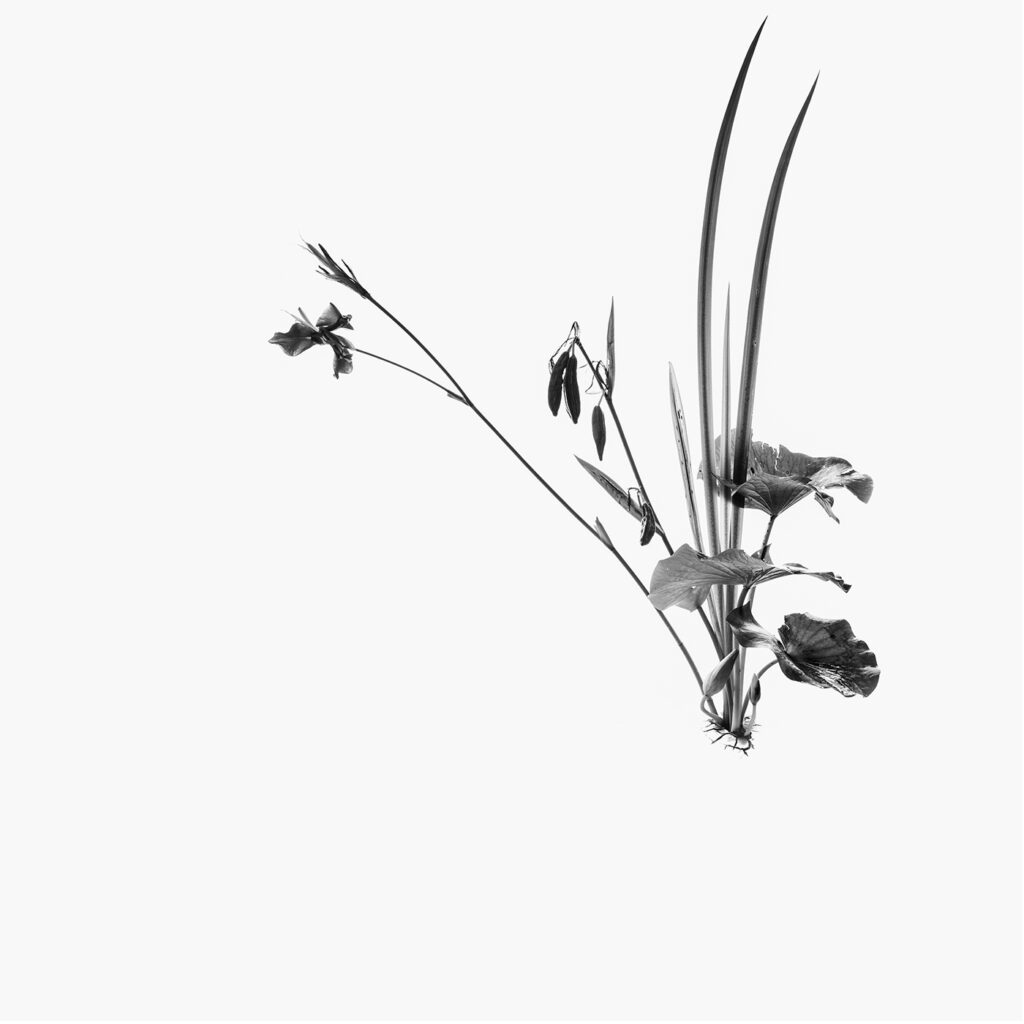
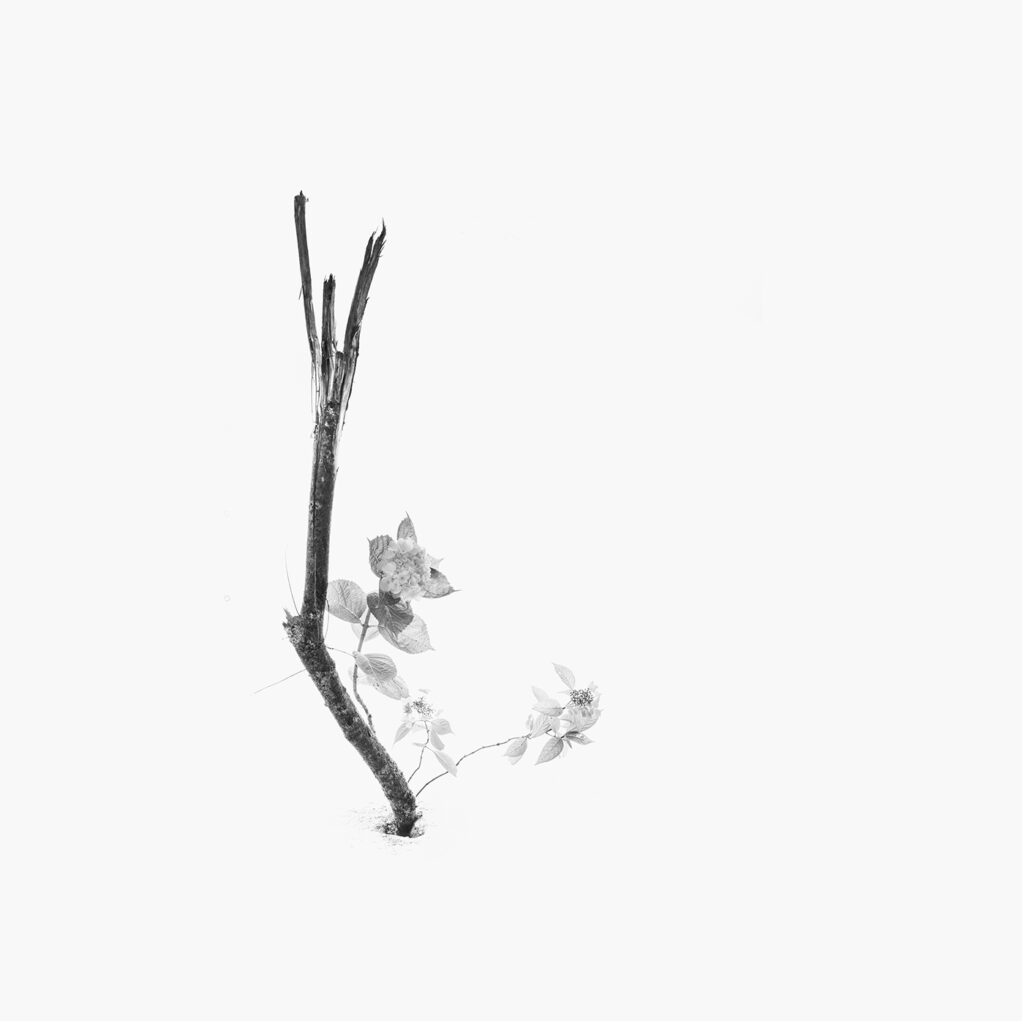
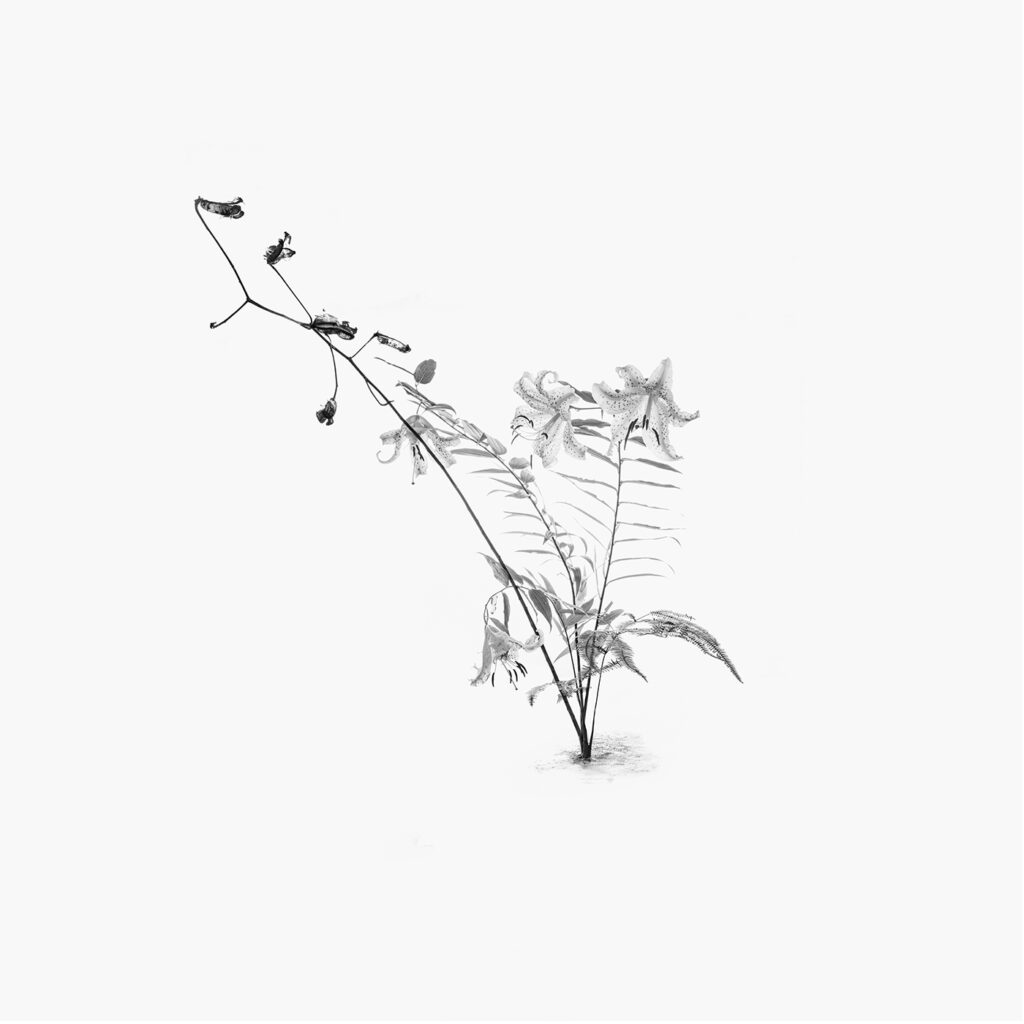
At times, I imagine – if even those in conflict were to pause for a moment before the flowers I arranged and sense the quiet poem within them, perhaps something between them might soften.Through the quiet presence of flowers, I wish to create a moment in which time seems to stop,
a moment of silence shared with others. To “be silent together,” I believe, is a new form of dialogue – and perhaps the deepest kind of consolation. That belief lies at the origin of my work.
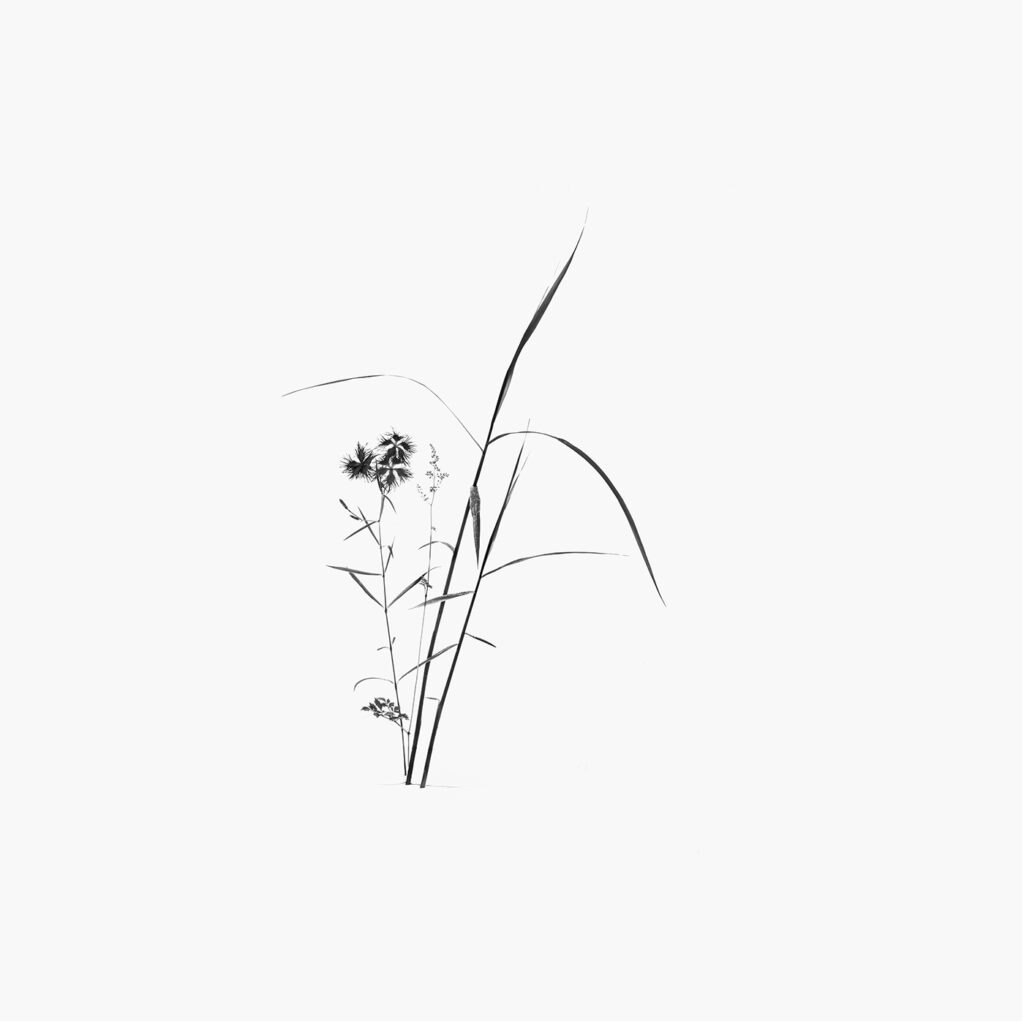
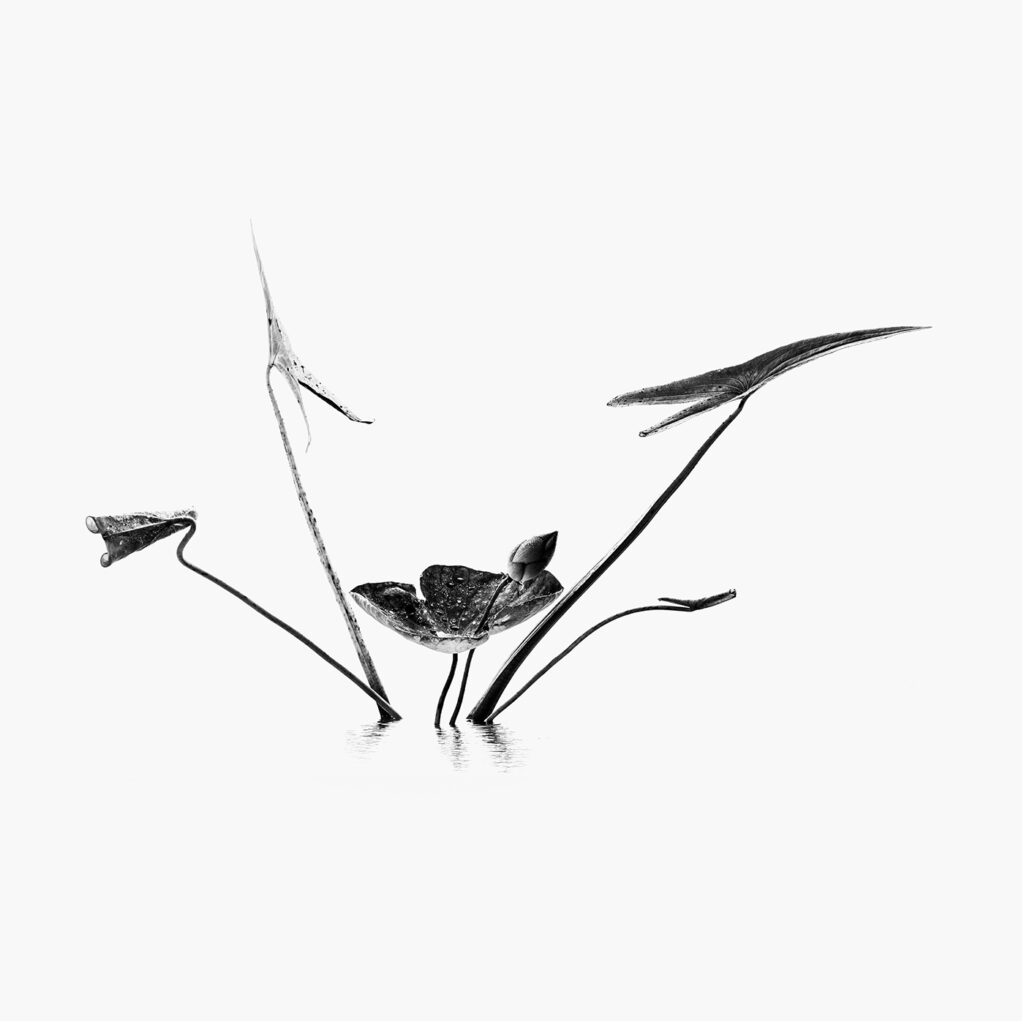
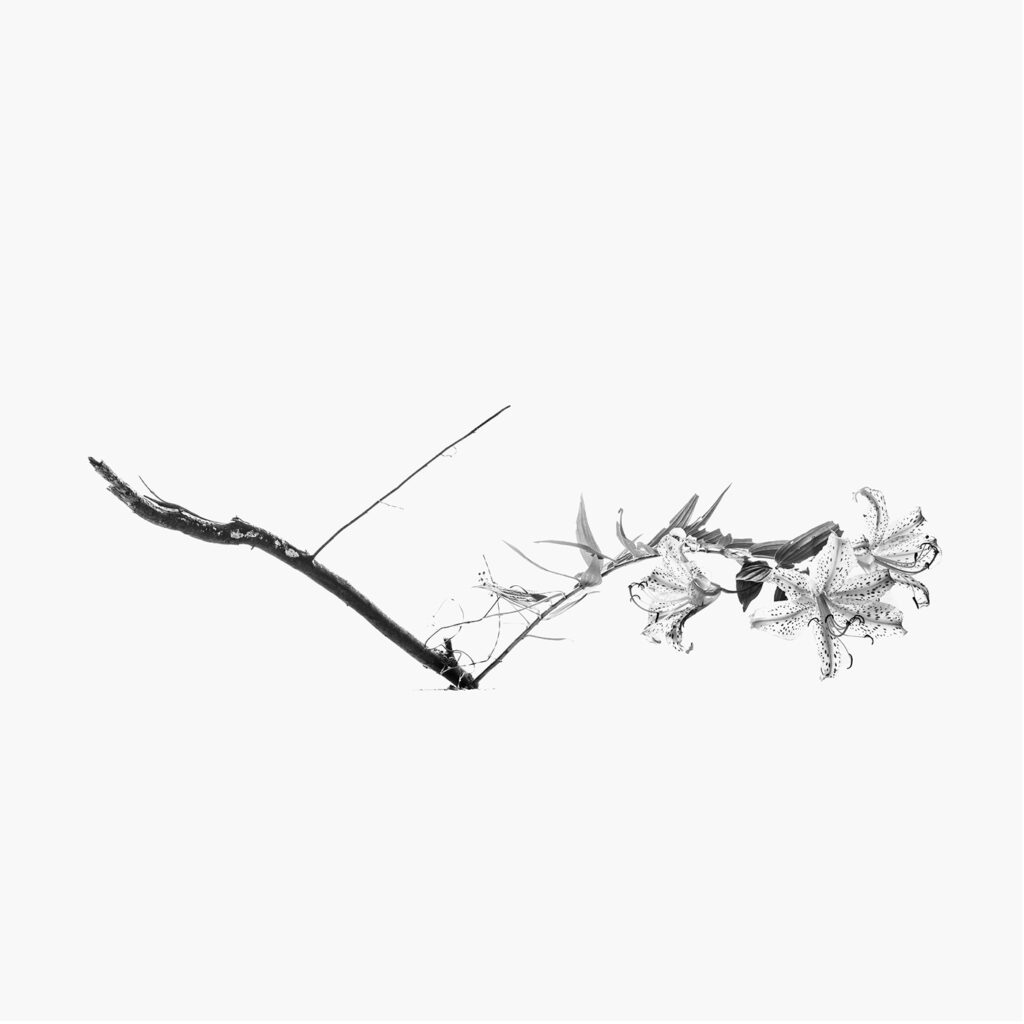
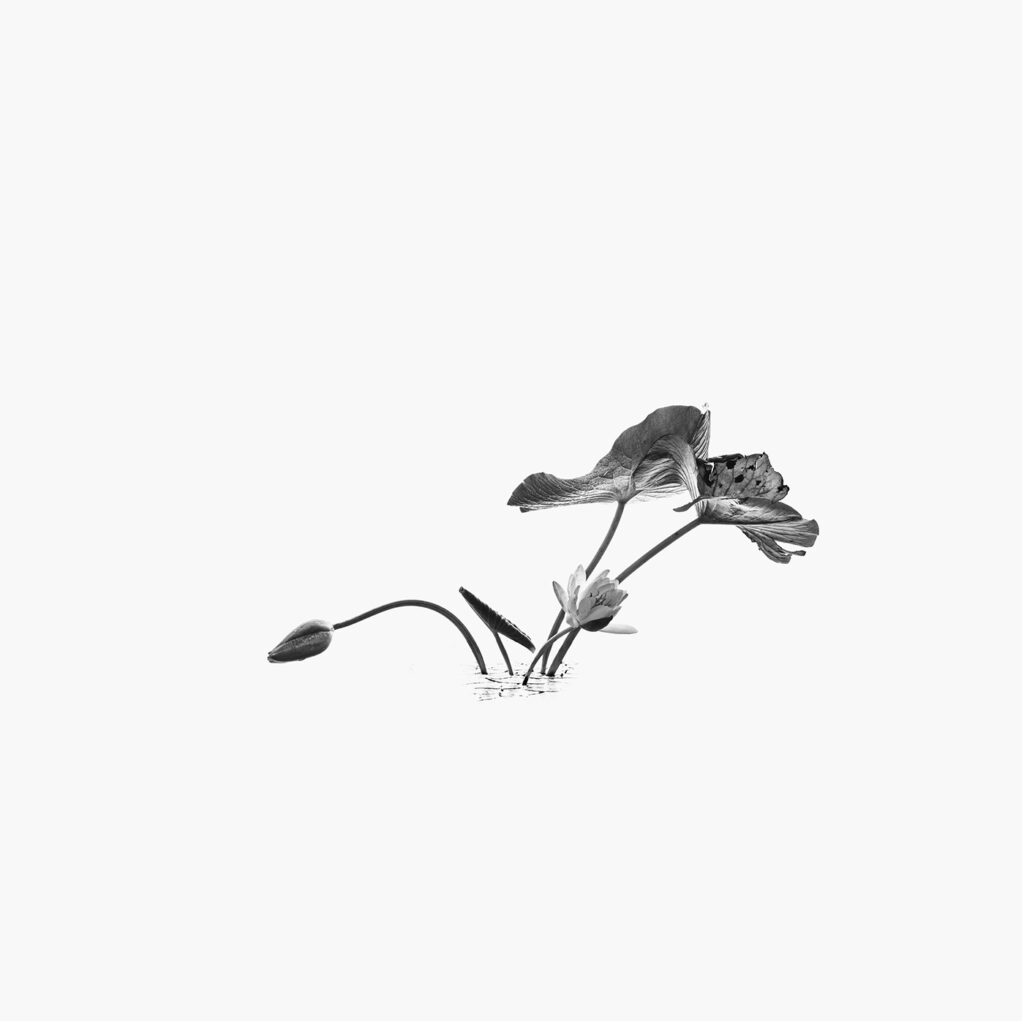
In my series 17 Syllables – Echoes of Stillness, I sought to incorporate into photography the quietude and layered minimalism inherent in Japanese haiku. For that purpose, I drew inspiration from Matsuo Bashō (1644 –1694) and his renowned poem:
An old pond;A frog jumps in –The sound of water.
(Furuike ya / Kawazu tobikomu / Mizu no oto)
This brief yet profound verse has had a decisive influence on my artistic vision. In Bashō’s late haiku, nature is not merely described; it becomes a bridge between external reality and inner perception. With the simplest elements – sound and silence, stillness and motion – he evokes a multi-layered world where time and space dissolve.
A key device in haiku is kire (“cut”), which interrupts the flow and gives rise to ma (“interval” or “emptiness”), expanding the reader’s imagination and sensory awareness. In Furuike ya, the particle ya signifies this cut. If it were Furuike ni, it would have remained a mere description of a scene. But through the brief rupture of ya, the reader imagines the pond, hears the splash, and feels the stillness that follows.
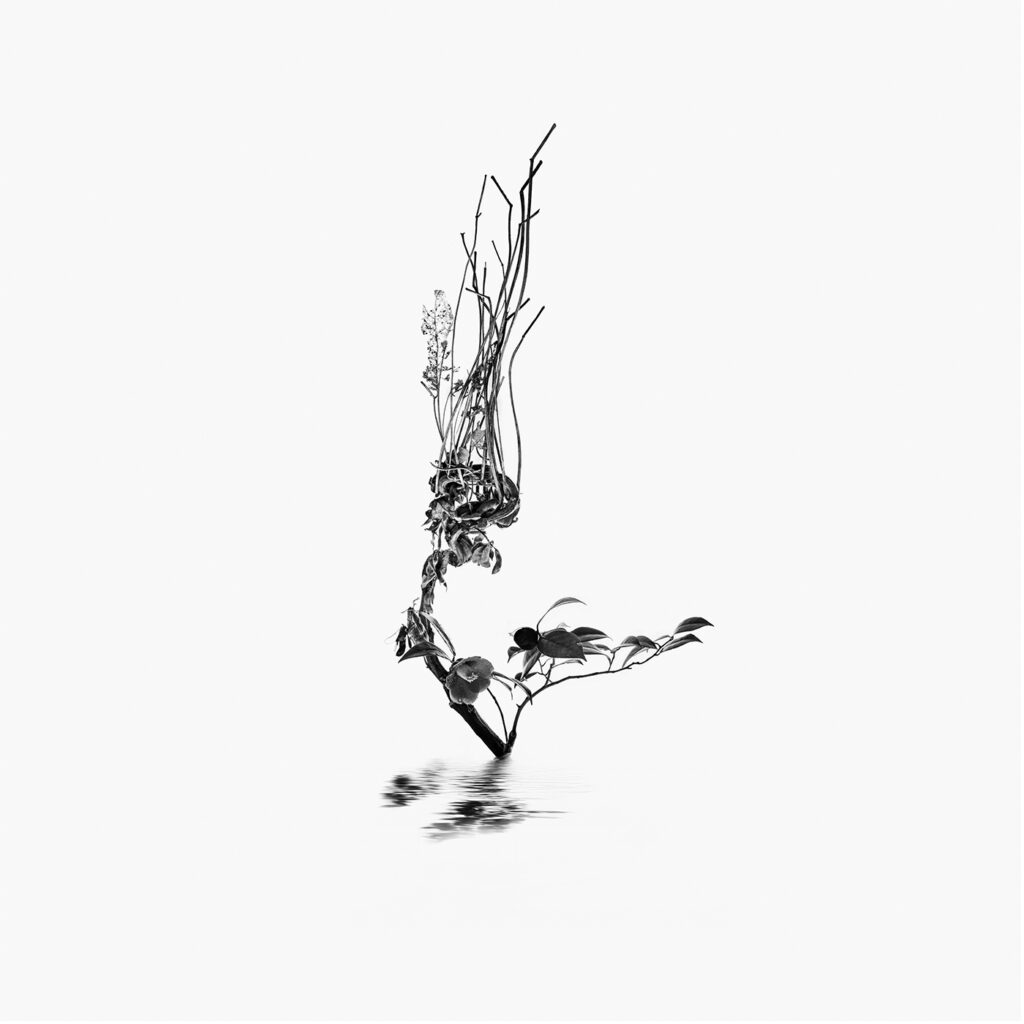
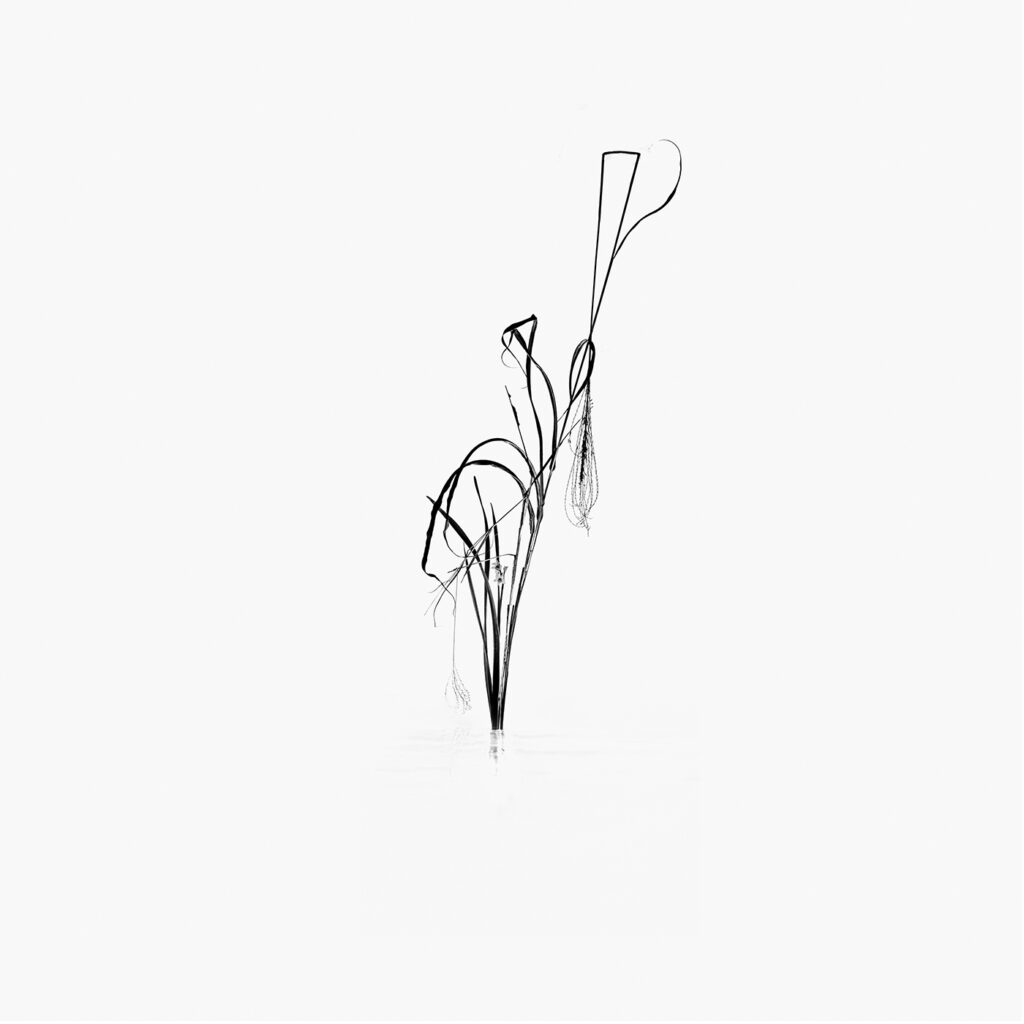
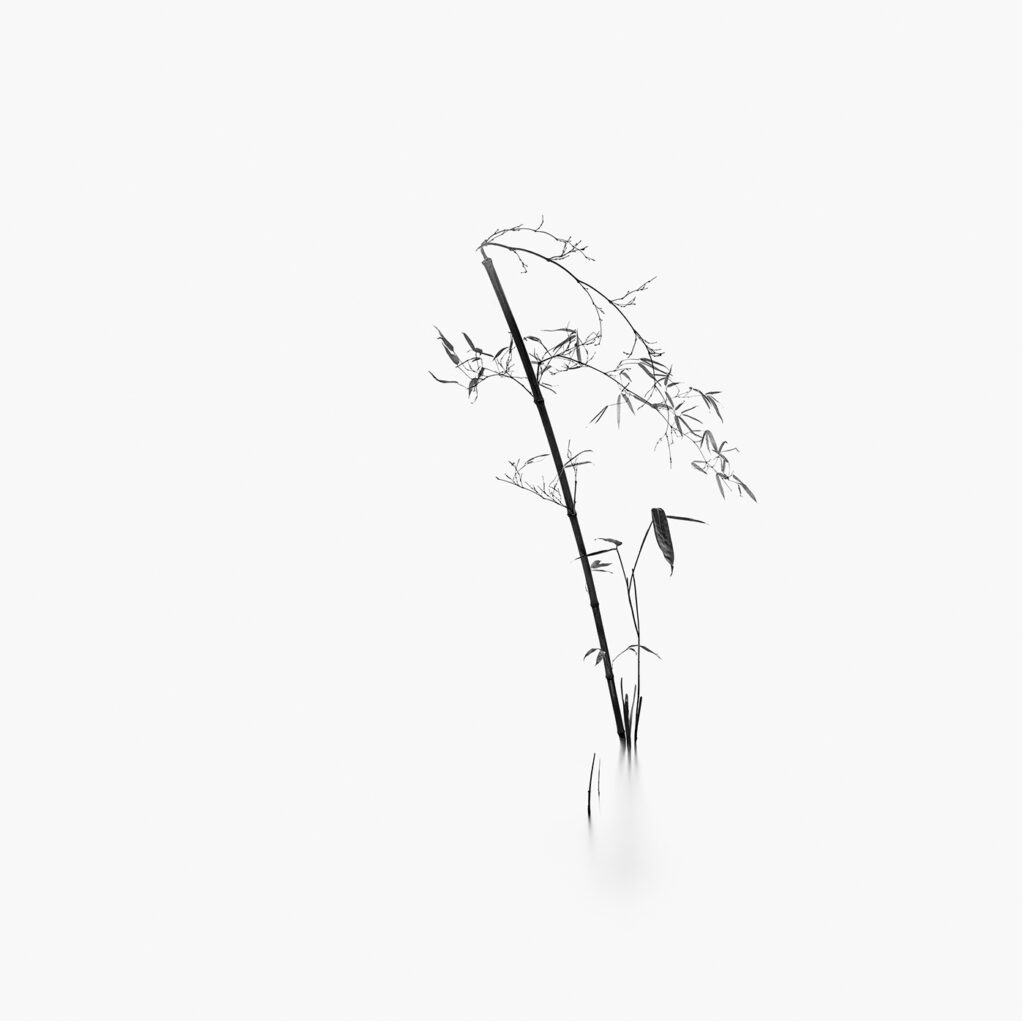
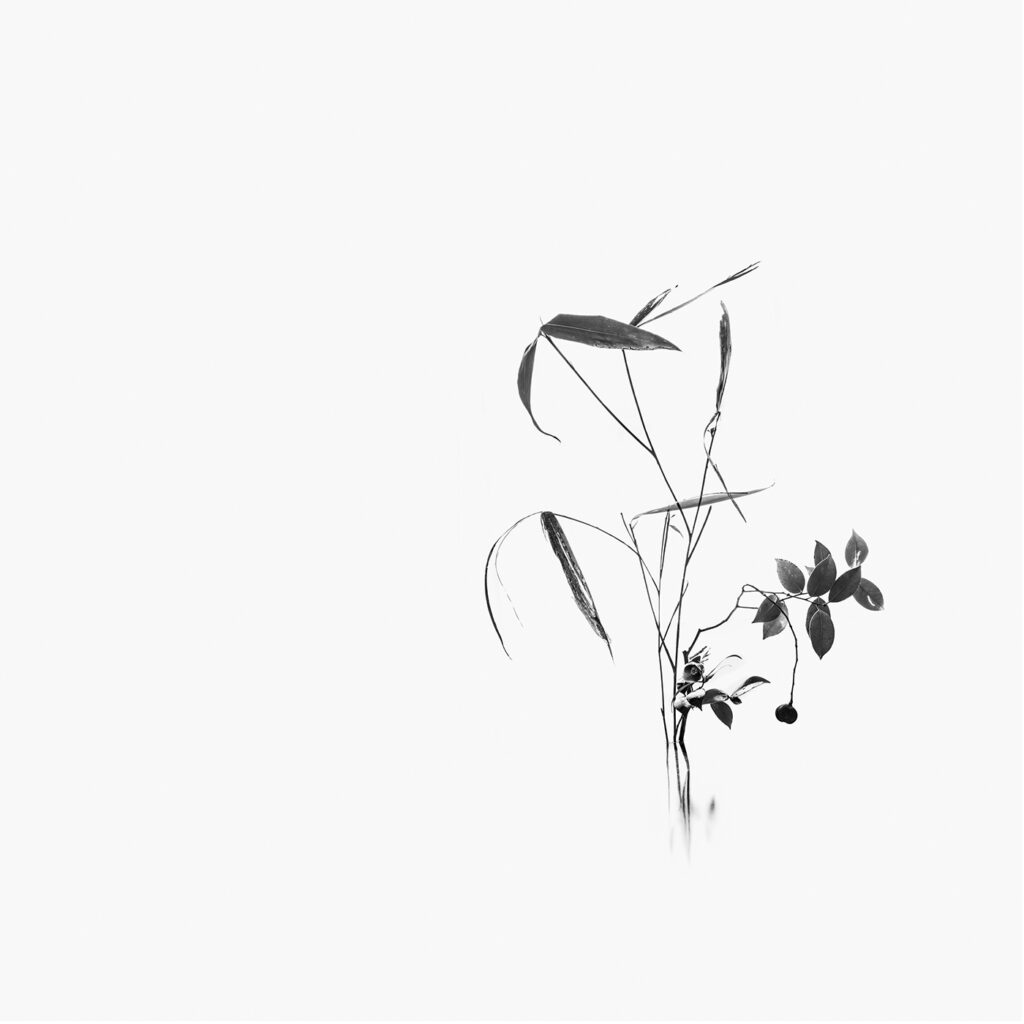
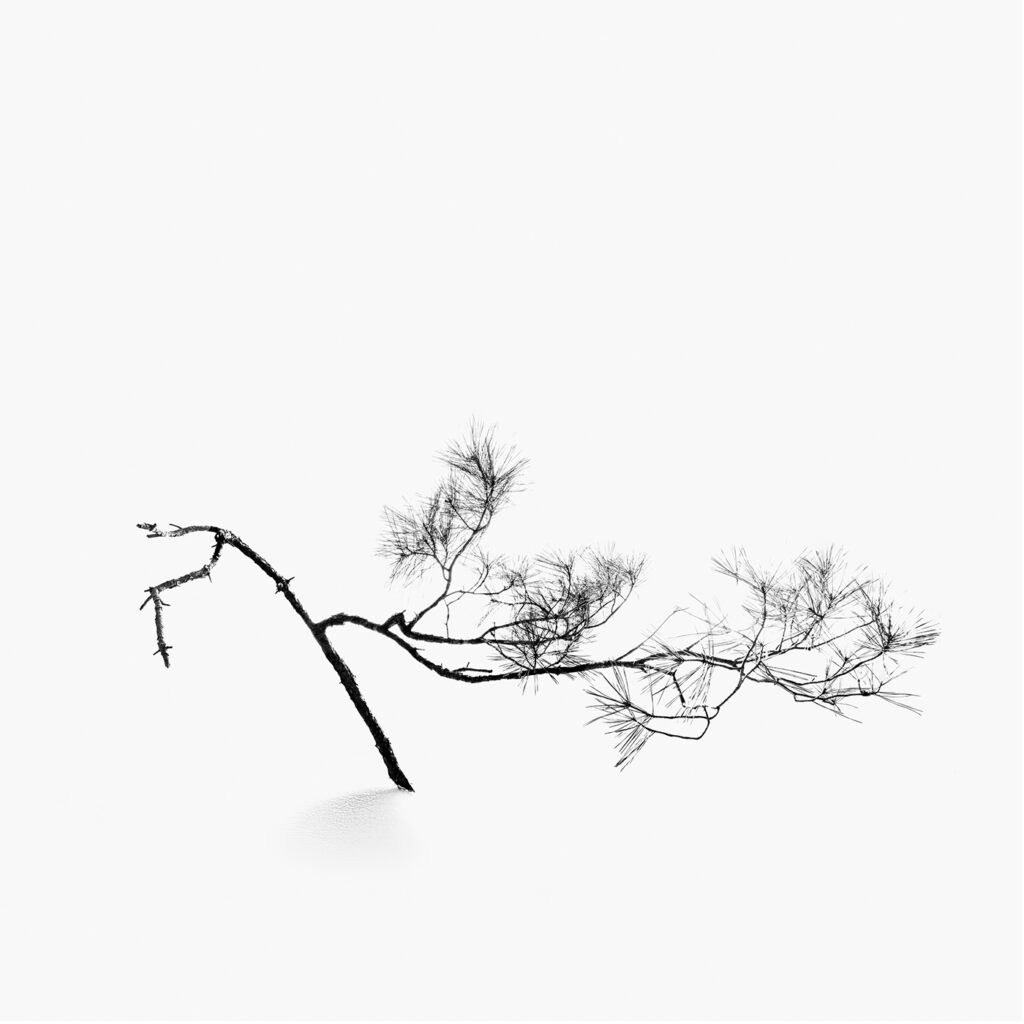
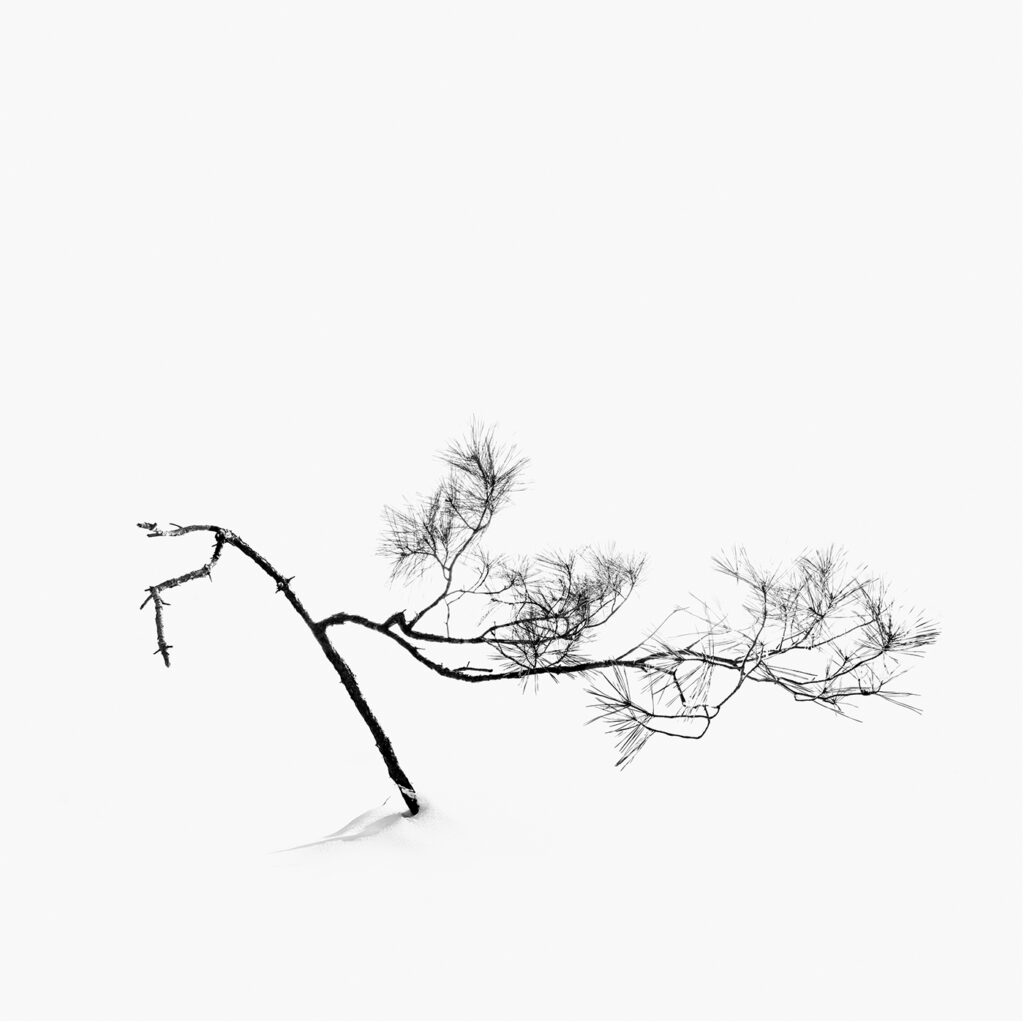
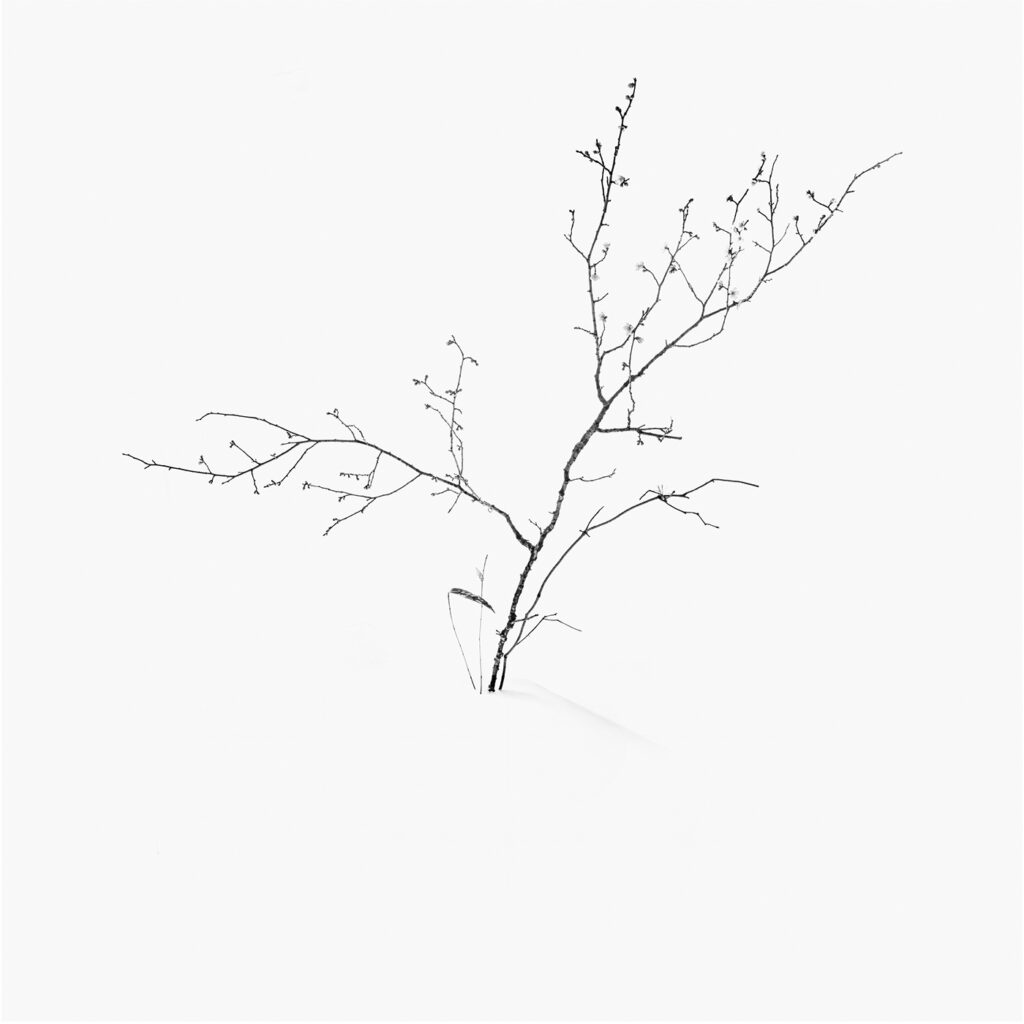
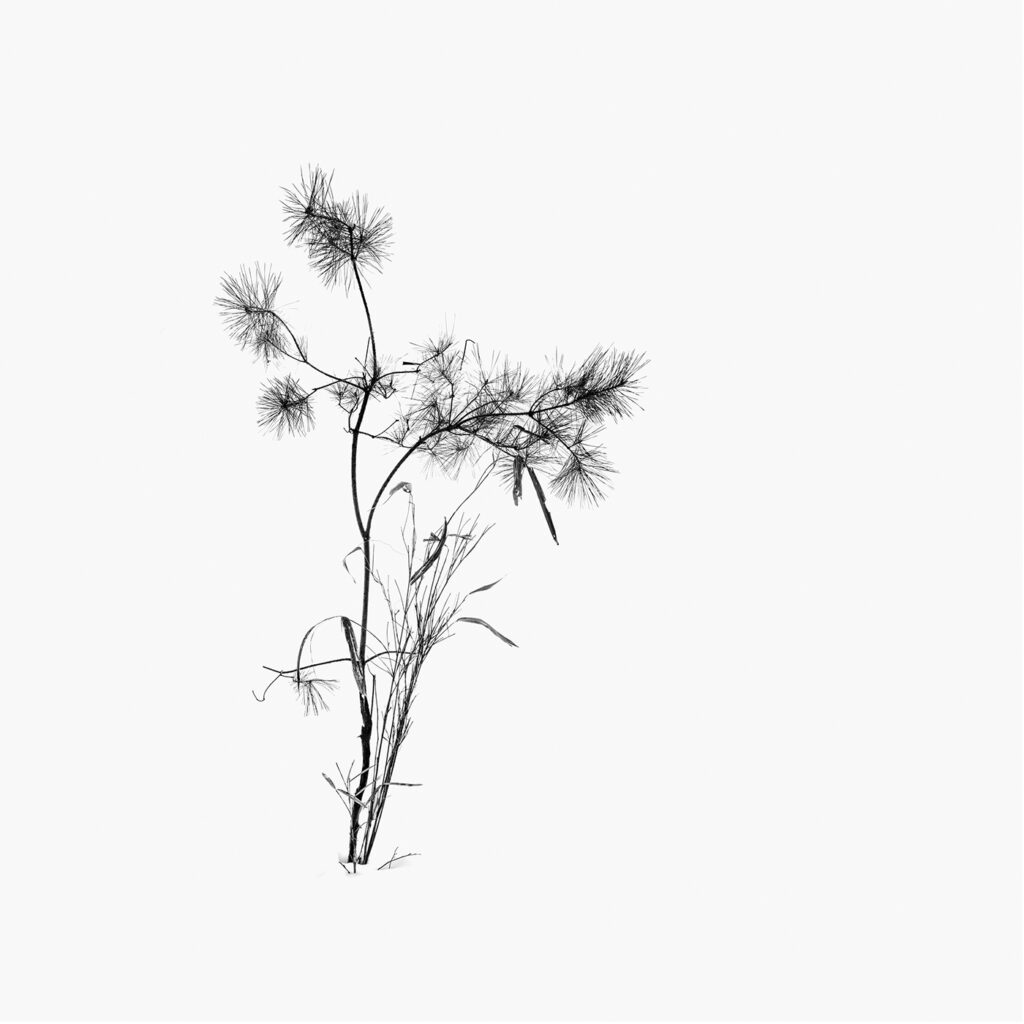
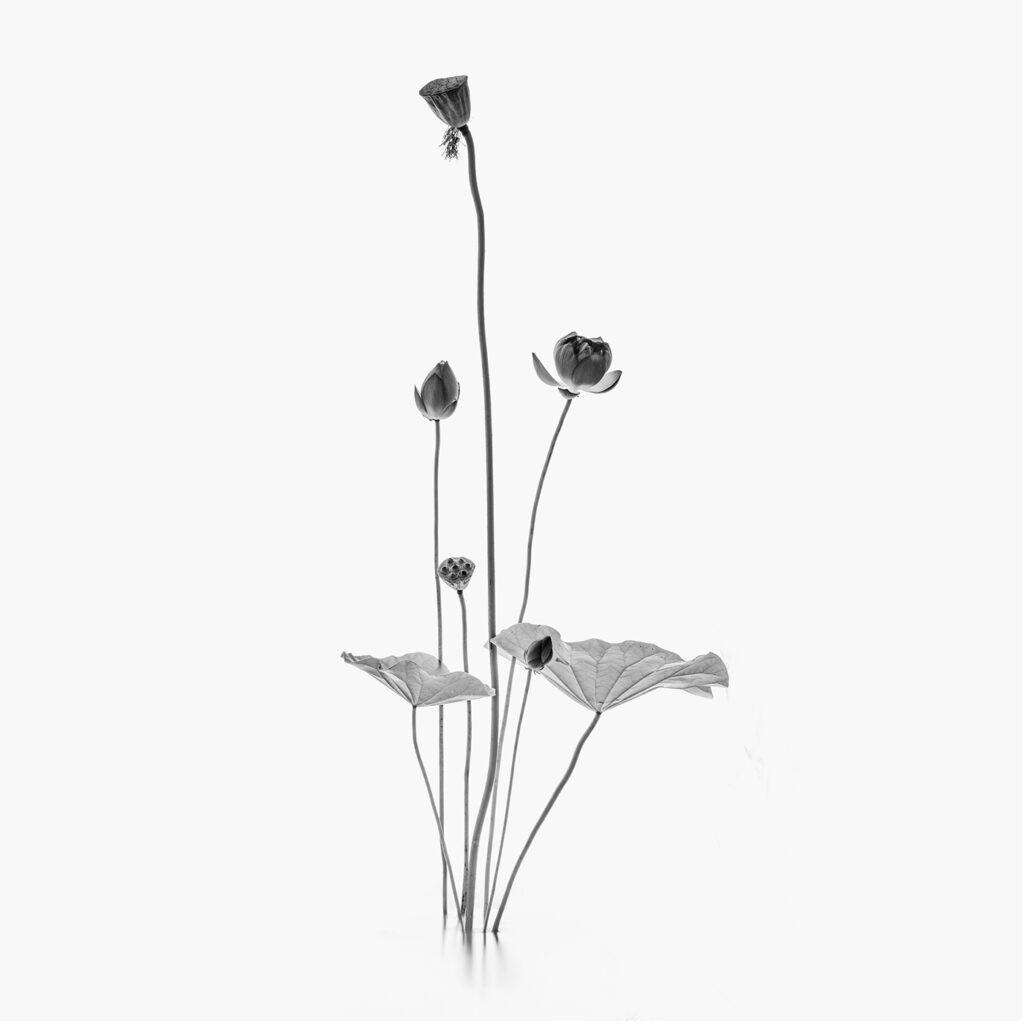
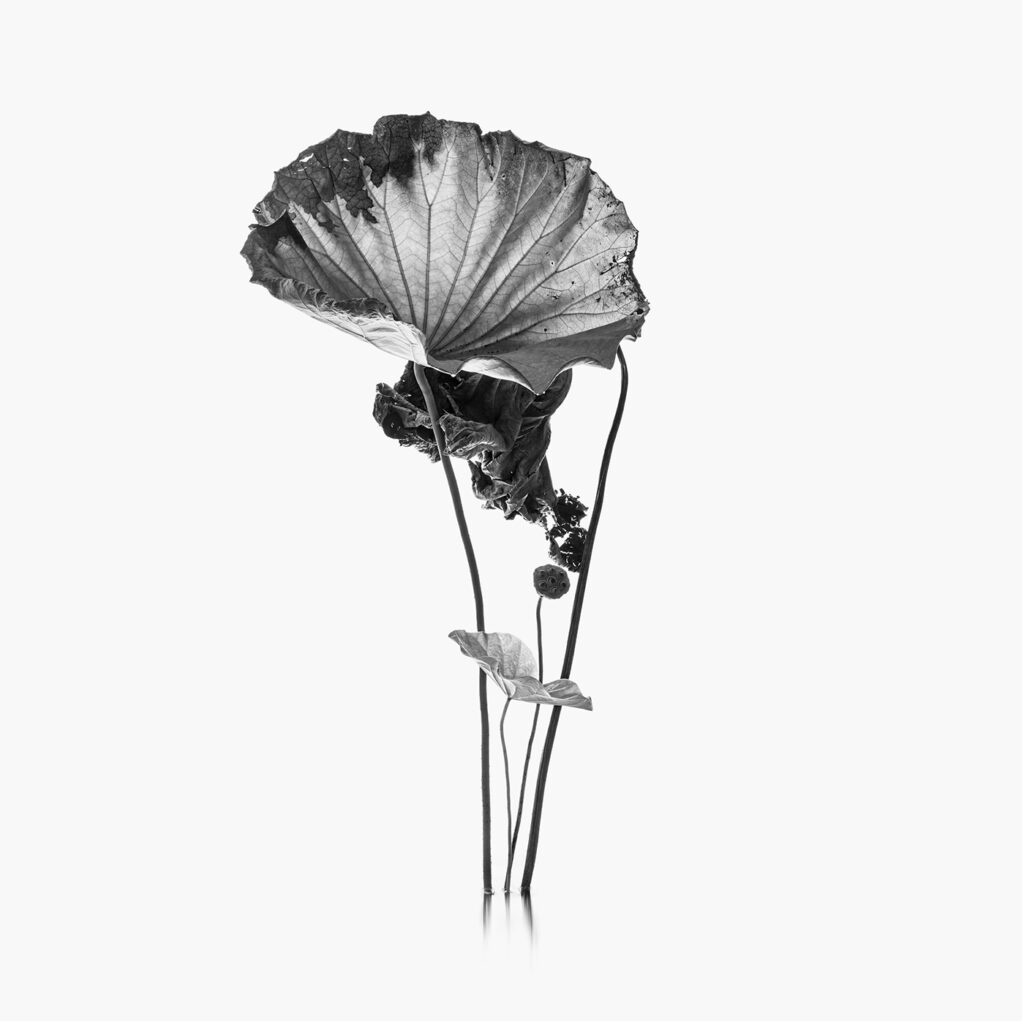
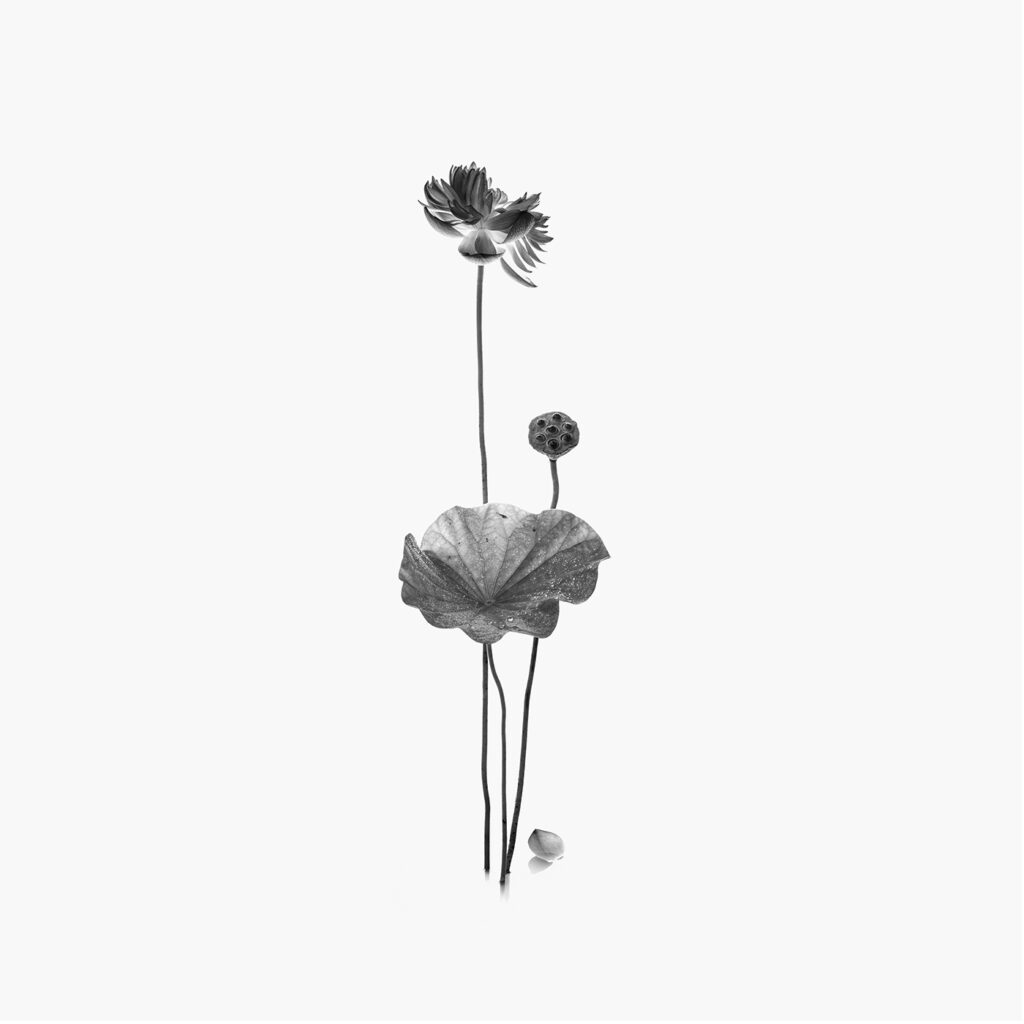
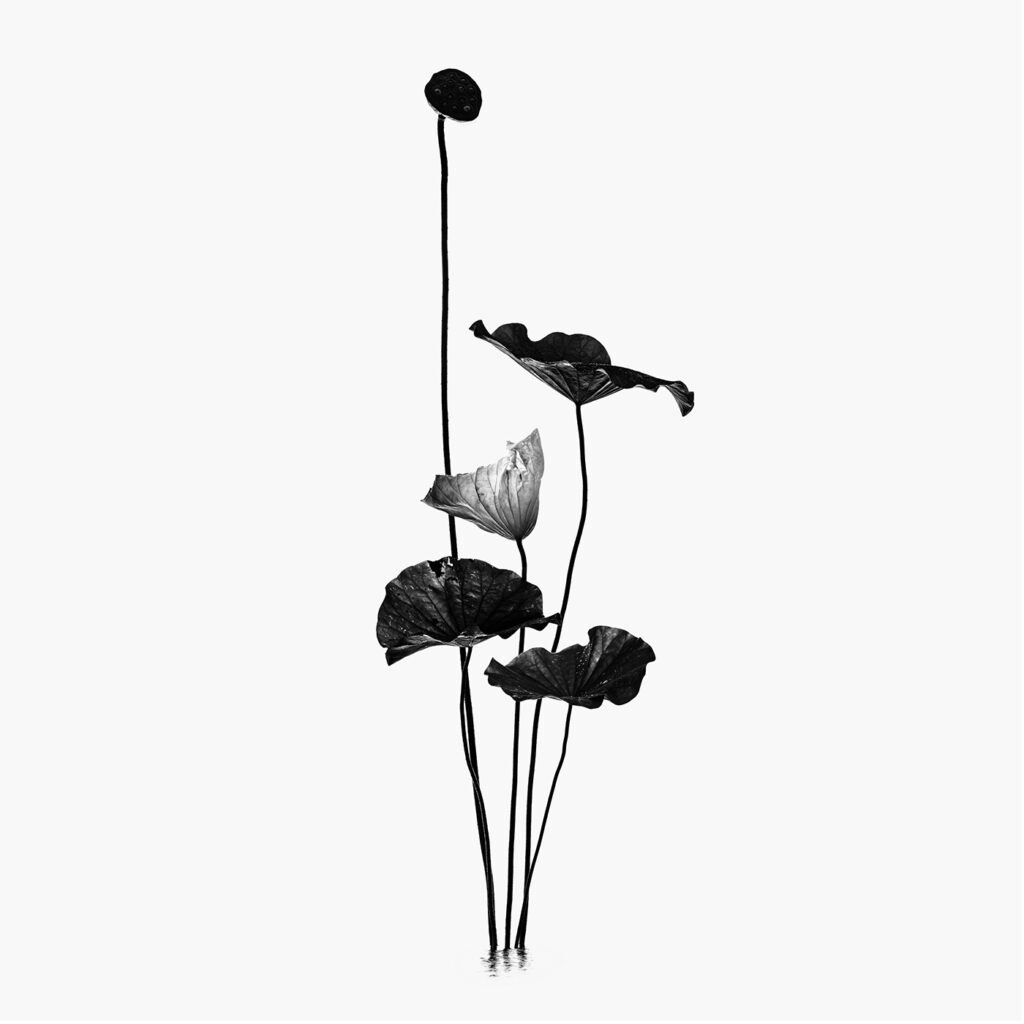
This structure became the foundation of my photographic expression. I collect flowers, branches, and grasses from the Japanese mountains, arrange them myself, and regard the point where the flower meets the water as the “cut.” Photographed in backlight against a white field, the image gives birth to a space filled with light.
A trace of snow may turn that blankness into a snowfield; a reflection may become the surface of a lake; a crack may suggest dry earth. In that moment, the empty space within the frame is quietly displaced – transformed into memory or imagination within the viewer.
This displacement of perception lies at the very core of the experience brought forth by kire and ma. It is the moment when the external landscape and the internal landscape of the mind gently exchange places – when the viewer sinks inward, and from a single silent “cut,” enters an infinite expanse of stillness.